Road noise, panel vibration and speaker resonance can make a car cabin feel less refined, particularly during longer journeys. For owners considering Car Door Damping in Nagpur, the important question is not simply whether damping is popular, but whether it addresses the problem they are experiencing.
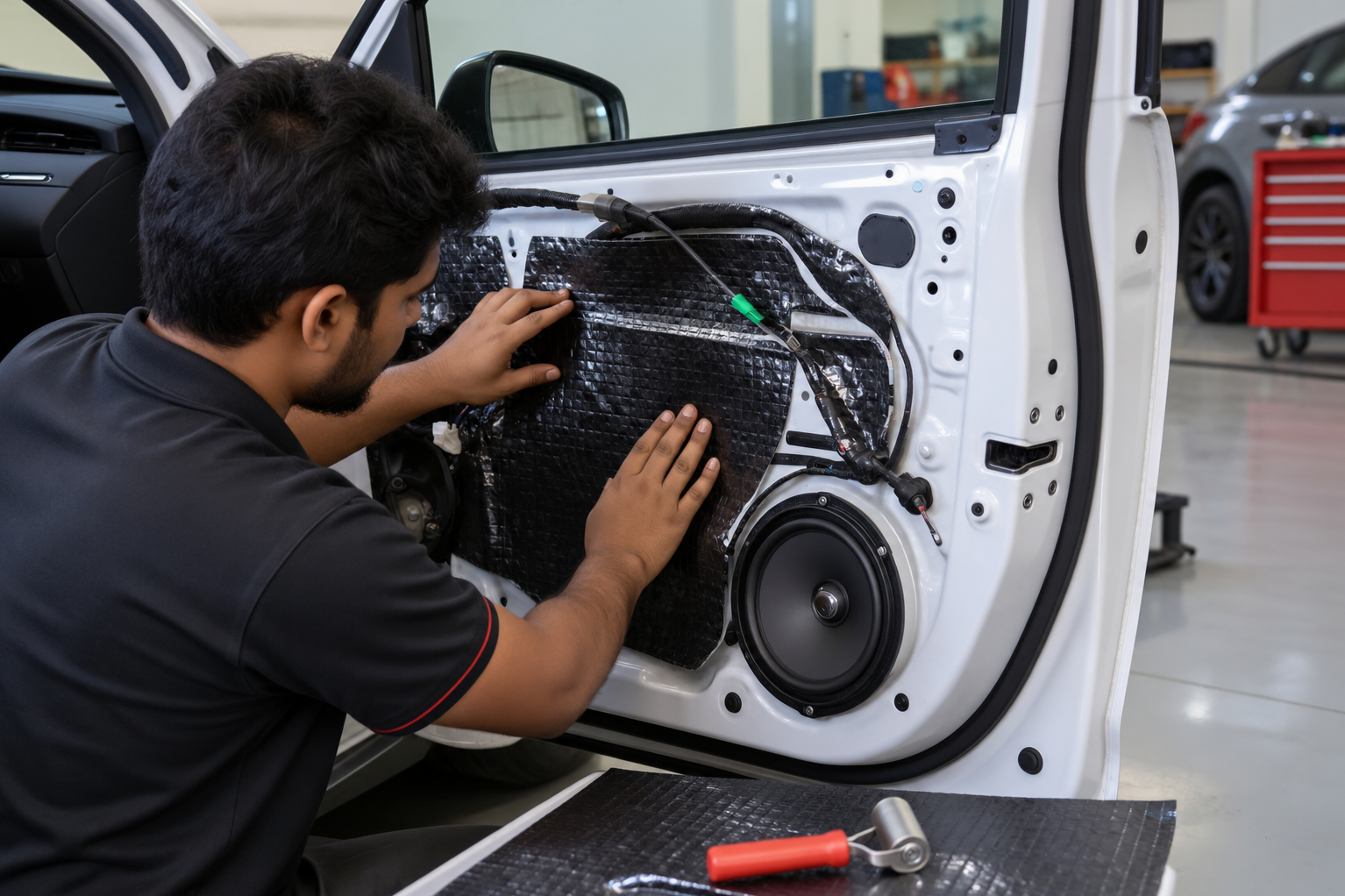
Door damping involves installing suitable damping material within designated areas of a car door. It is commonly considered alongside audio upgrades because a door acts as the mounting environment for many factory and aftermarket speakers.
Without sufficient control, metal surfaces and panels may contribute to unwanted vibration or resonance.
Damping can be worth evaluating when:
- Door panels vibrate during music playback
- Speakers sound less controlled at certain frequencies
- An audio upgrade is being planned
- The owner wants to reduce certain cabin noises
- Doors feel acoustically hollow
- Road and external noise are affecting listening comfort
However, damping should not be presented as a solution to every sound inside a car.
Noise can originate from tyres, wheel arches, engine components, loose interior panels and other areas. If the main problem comes from somewhere other than the doors, treating only the doors may not produce the expected change.
This is why identifying the noise source comes first.
For audio enthusiasts, damping can be particularly relevant when upgrading door-mounted speakers. A more controlled mounting environment may help the speaker perform more consistently and reduce unwanted panel resonance.
Material placement is important as well. Simply adding excessive material is not the goal. The installation needs to account for the door's construction, moving components, wiring, drainage and mechanisms.
Nagpur residents who frequently travel on busy roads or Maharashtra highways may notice cabin and road noise more during longer journeys. Yet each vehicle behaves differently, so assessment should be vehicle-specific.
RS Car Accessories provides car audio and accessory services in Nagpur, including solutions where door damping may form part of a broader audio or cabin-comfort upgrade. Vehicle owners should explain the exact problem they are trying to solve before choosing the extent of damping.
When discussing installation, ask:
- Which areas will receive damping?
- What type of material will be used?
- Will door mechanisms remain easily serviceable?
- Is damping being installed for audio performance, noise reduction or both?
- Are there other noise sources that should be inspected first?
Good installation should also ensure that panels are reassembled securely. Loose clips or poorly refitted trims can introduce new rattles, defeating part of the purpose of the work.
Car door damping is most worthwhile when there is a clear objective. If the problem is speaker-related vibration or specific door resonance, it can be a logical upgrade. If the goal is complete cabin silence, expectations need to be more measured.
Diagnose first, choose the appropriate treatment second. That approach provides better value than installing damping simply because it appears on an accessory package.
Keywords