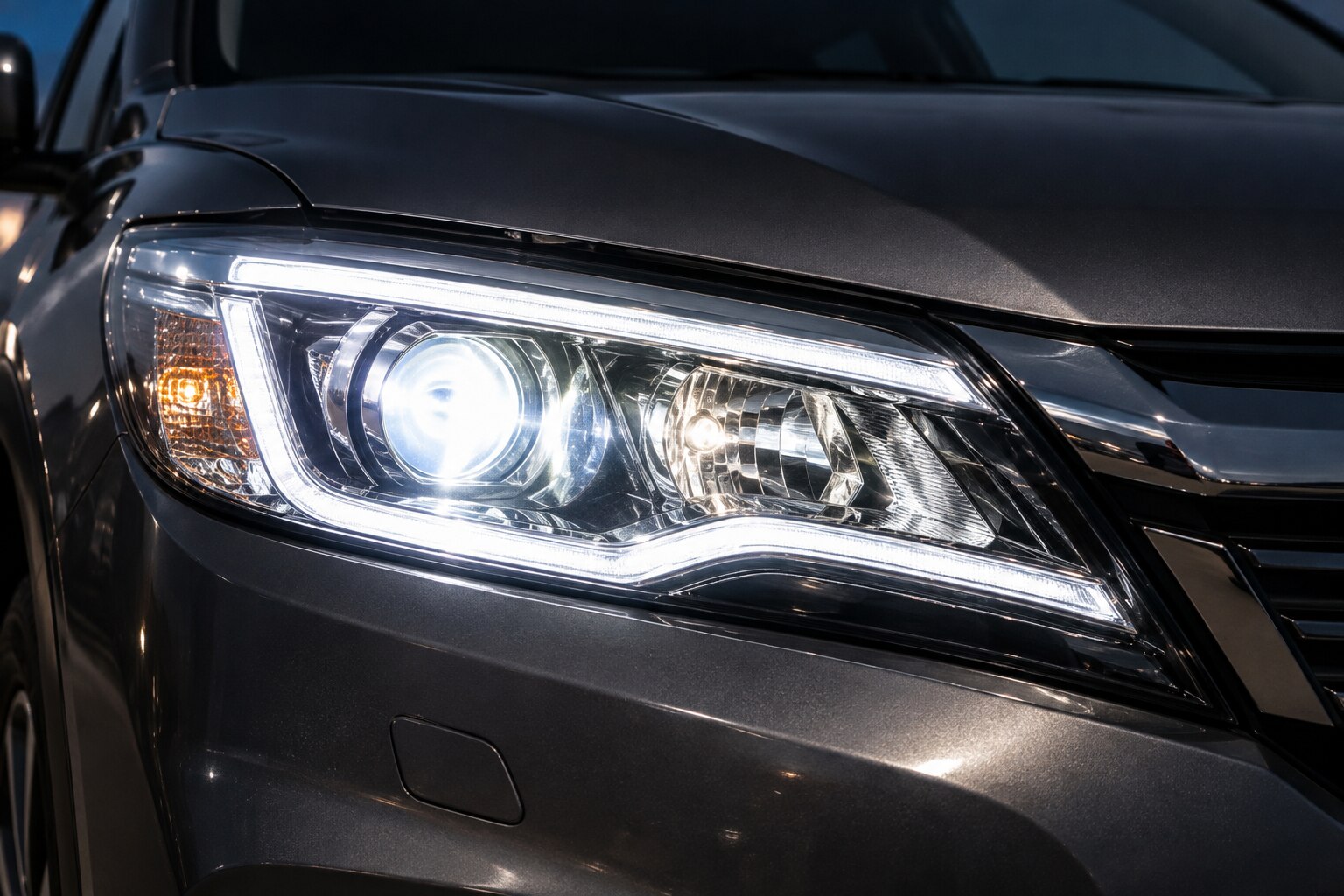
A headlamp that looks intensely bright from close range can still leave the road ahead dark, create glare, or scatter badly in rain. By the end, you will be able to compare light sources, read beam performance, choose the right lamp for each driving condition, and identify when alignment or installation matters more than a higher wattage or lumen claim.
Key takeaways
- Judge headlights by road illumination and beam reach, not lumen claims alone.
- Choose halogen, LED, HID or bi-xenon based on your car’s original system.
- Check beam pattern and alignment to avoid glare and dark areas.
- Clean cloudy lenses and test the beam after every headlight upgrade.
What Actually Determines How Far You Can See at Night?
Useful night visibility is determined by how much light reaches the road at distance, not by the bulb’s advertised lumen number alone. A high-lumen source can create a bright foreground hotspot while leaving hazards beyond it dim.
| Metric | What it tells you | What it cannot prove |
|---|---|---|
| Lumens | Total light produced by the source | How efficiently the headlamp projects it onto the road |
| Lux | Light reaching a measured surface at a stated distance | Whether the beam covers the correct width without glare |
| Beam intensity | Concentrated light in a particular direction, usually reported in candela | Whether the beam pattern is safe or evenly distributed |
| Colour temperature | The light’s appearance, measured in Kelvin | Greater seeing distance or better illumination |
Lux readings are useful only when the test distance and measurement points are stated. A single peak figure can hide poor side coverage, a weak cutoff or excessive foreground light. Ask for a photometric test or an aiming-screen result showing low-beam reach, left-right symmetry and glare control.
Independent headlamp tests, including IIHS evaluations, report low-beam visibility, high-beam visibility and glare. Those results reveal more than “twice as bright” claims.
Understand colour temperature meaning before choosing a whiter lamp: a higher Kelvin number changes perceived colour, not necessarily road illumination. Blue-rich light can scatter more in rain, fog, a dirty windscreen or ageing eyes, reducing contrast when you need it most.
Halogen, LED, HID or Bi-Xenon: Which Technology Fits Your Car?
A standard halogen setup is the simplest replacement, while LED or HID systems make sense only when the headlamp housing, electronics and beam optics support them. The brightest-looking option is not automatically the one that gives the longest useful seeing distance.
| Technology | Brightness and beam control | Heat, start-up and lifespan | Power draw and replacement cost |
|---|---|---|---|
| Halogen headlights | Moderate output with predictable beam control in the original reflector or projector | Produces substantial heat; starts instantly; shortest lifespan of the four | Higher draw than LED; lowest replacement cost |
| LED headlights | High potential output and precise control in a matched lamp; an LED retrofit can create glare or dark zones | Heat moves into a rear heatsink or fan; starts instantly; long lifespan when cooled correctly | Low draw; replacement cost ranges from modest bulbs to expensive complete assemblies |
| HID headlights | Strong intensity and distance in a compatible projector; requires a ballast and controlled arc position | Less bulb heat than halogen but significant ballast and housing heat; needs a brief warm-up; long lamp life | Lower draw than halogen; higher replacement cost because the bulb and ballast are paired |
| Bi-xenon headlights | HID headlights using a projector shutter for low and high beam; sharp control in the correct assembly | Brief start-up delay; long lifespan; shutter and ballast add failure points | Low draw; highest replacement cost when the projector, ballast or shutter needs service |
Do not fit a high-wattage halogen bulb as a shortcut. It can overheat the socket, wiring, fuse, reflector or lens. Judge any upgrade on its cutoff, symmetry, hot spots and distance illumination, not a lumen claim.
Why Beam Pattern and Alignment Matter More Than a Brightness Claim
Judge the beam on a flat wall and on the road ahead, not by staring into the lamp or trusting its lumen claim. Effective low beams put light at useful distance while keeping a sharp cutoff below drivers’ eye level. A high-lumen source can still create weak distance illumination, excessive foreground lighting or glare.
- Park on level ground facing a wall, with correct tyre pressures and the vehicle unloaded. The two cutoffs should sit at the same height and remain symmetrical across the car’s centreline.
- In left-hand traffic, the beam should rise toward the left road edge, not into oncoming traffic. A broken or wandering cutoff points to poor optics, incorrect bulb seating or misalignment.
- Look for a controlled hotspot that extends down the road rather than a bright patch immediately ahead of the bumper. Excessive spill light above the cutoff causes glare, even when the road appears bright from the driver’s seat.
- Check the lens, reflector or projector before blaming the bulb. Haze, dirt and moisture scatter light and soften the cutoff.
An LED replacement bulb in a halogen housing can shift the filament’s focal position, producing dark zones or uncontrolled glare. Ask for an aiming-screen or photometric-tester check after installation; brightness viewed from in front of the car proves very little.
A properly aligned beam that reveals lane markings and road edges at distance is safer than a whiter, brighter-looking beam.
Match the Lamp to Rain, Fog, City Streets or Open Highways
Use low beam in city streets, rain and normal traffic; its controlled cutoff protects oncoming drivers while lighting lanes and signs. Use high beam on an unlit open highway only when no vehicle is approaching or travelling ahead. Dip it before bends, crests and junctions where traffic may appear.
| Choice | Best use | What goes wrong |
|---|---|---|
| Low beam | Built-up roads, rain and normal traffic | High aim creates glare |
| High beam | Empty, unlit highways | Reflections and dazzle in rain, fog or traffic |
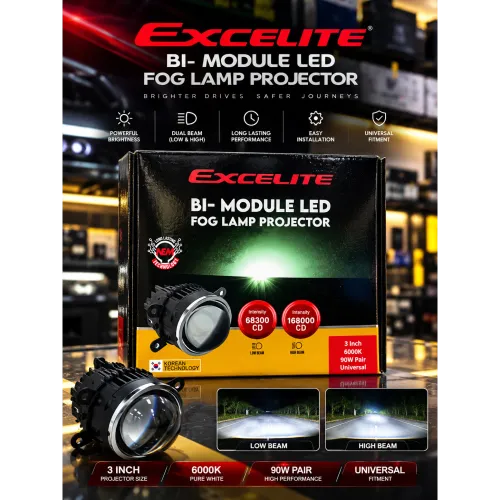
| Fog lamps | Broad, short, low-mounted beam in fog or heavy spray | Upward aim adds glare without showing farther |
| Auxiliary driving lights | Extra reach on dark roads when legal and traffic-free | They do not replace properly aimed low beams |
| Projector retrofit | A compatible housing needing a sharper cutoff and controlled distribution | A poor retrofit creates hot spots, weak distance light or glare |
Choose colour temperature for visual comfort, not a whiter appearance. Blue-rich, high-colour-temperature light does not guarantee better road illumination and can create more veiling glare through rain, fog, a dirty windscreen or ageing eyes; neutral or warmer white is often easier to use.
An adaptive driving-beam system can preserve high-beam reach while shading detected vehicles, unlike manual high beams or ordinary automatic switching. It needs compatible lamps, a clean camera and accurate calibration.
Make the Upgrade Safe: Fitment, Aim, Lens Condition and Testing
A successful upgrade starts with correct fitment, not the highest lumen claim. Confirm the bulb base, wattage, connector, dust cap and housing match your vehicle; a forced connector or loose seal can cause flicker, moisture and heat damage.
Check that the lamp is approved for road use in your jurisdiction, because an LED replacement does not automatically make a halogen housing legal.
| Check | What to confirm | Why it matters |
|---|---|---|
| Beam pattern | Left-hand-traffic beam pattern, sharp cutoff and equal left-right spread | Prevents glare and lights the correct lane |
| Vertical aim | Cutoff height on a flat wall or aiming screen | Stops the beam pointing into oncoming eyes or the sky |
| Lens condition | No yellowing, cracks, clouding or internal condensation | Damaged optics scatter light and reduce distance visibility |
| Electrical load | Fuse, socket, wiring and alternator suit the lamp | Excess heat can melt connectors or cause failure |
After installation, test both low and high beams from the driver’s seat and from 25 feet away on level ground. Confirm that headlamp levelling works with passengers or luggage, then test the cutoff, road reach and high-beam transition at night without judging brightness from directly in front.
- Replace a cloudy lens or arrange headlight restoration before fitting a stronger lamp.
- Recheck aim after suspension work, load changes or a minor collision.
- Have RS Car Accessories verify the beam on an aiming screen during installation, rather than relying on a visual guess.
Related products
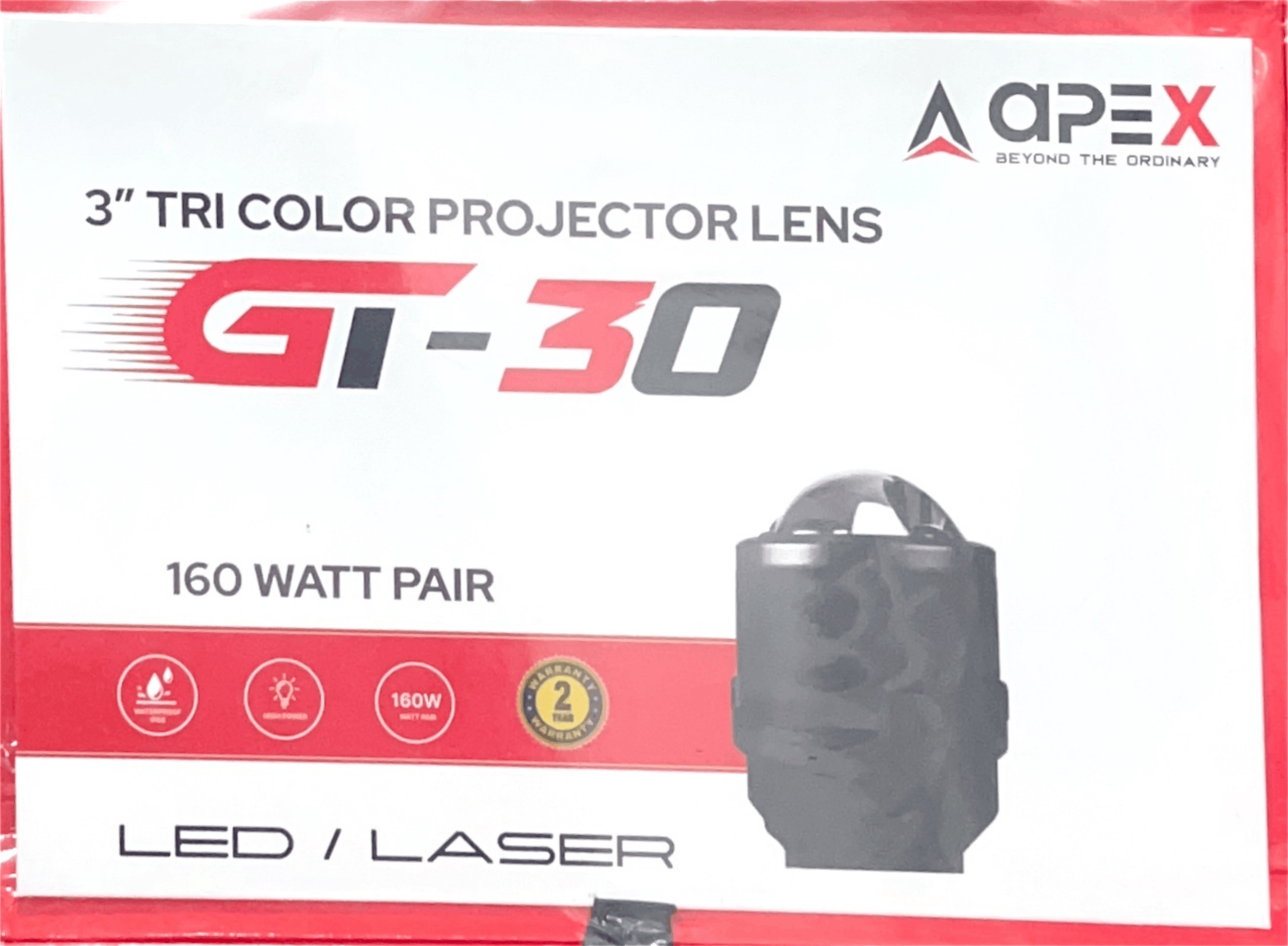 | Led HeadLamp ₹17990 it will enhance light visiablity View product → |
 | Led HeadLamp ₹7000 higher brightness, high spotlight , long lifespan , installation safety, stable performance View product → |
Frequently asked questions
What determines how far you can see while driving at night?
Road illumination at distance, beam reach, beam pattern, alignment, lens condition and weather determine useful visibility. Lumen output alone cannot show how well a headlight lights hazards ahead.
Should you choose halogen, LED, HID or bi-xenon headlights?
Choose the technology that matches your car’s headlamp housing, wiring, control system and legal fitment. A replacement that does not match the original optical system can create glare or poor road coverage.
Why do beam pattern and headlight alignment matter?
A correct beam pattern places light on the road without shining into oncoming drivers’ eyes. Correct alignment prevents dark areas, excessive foreground brightness and dangerous glare.
How should headlights be chosen for rain, fog, city streets and highways?
Use a controlled, properly aimed beam for every condition. Rain needs light that limits reflections, fog requires low glare and careful use of fog lamps, city driving benefits from controlled spread, and open highways need safe forward reach.
Related items
 | Auxiliary Led Lights best light solution low beam 34w high beam 58w 5500k waterproof IP67 View product → |
 | Eco Sports Projector Headlights ₹18000 Eco sports projector headlights View service → |
 | Auxiliary Lamp fit for different kind of bad weather , four lens optical glass design View product → |
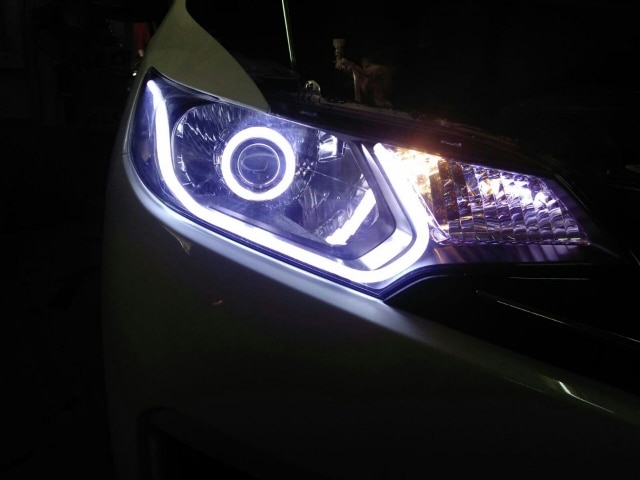 | ₹18000 Bi xenon projector head lights View service → |